Installation & finishes
Installation and finishes: from fixing to lasting protection
Iron sections, fixing methods (chemical anchoring, baseplate, mechanical anchor) and finish choice — galvanizing and powder coating — depending on your guardrail's exposure.
Fixing
Three methods depending on the support
Resin anchor injected into a drilled hole — the reference method on a stone, concrete or old masonry support.
Baseplate bolted at the base of each post, set on a slab or step — removable, quick to fit on an accessible structural support.
A faster alternative to chemical anchoring, with slight post-leveling adjustment after fitting.
Layout
Top fixing or face fixing
The choice of fixing point depends on your configuration: available walkway width, support thickness, and the look you want.
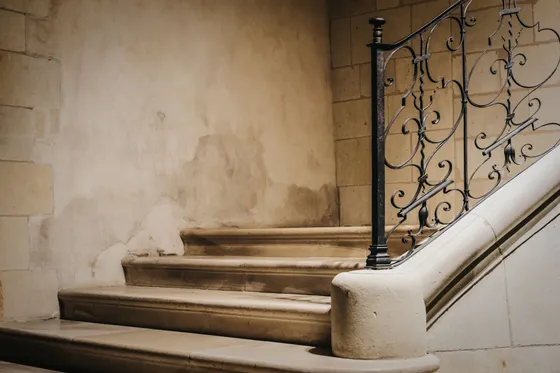
Top fixing (French style). The guardrail is fixed on top of the step, slab or low wall — the most common method.
Face fixing (English style). The guardrail is fixed to the vertical face of the support — useful when floor space is tight or to preserve walkway width.
Finishes
Protecting an outdoor structure durably
Oven-cured powder paint — holds colour and resists UV, but doesn't durably protect bare steel against corrosion outdoors.
Immersion in a molten zinc bath (NF EN ISO 1461) — decades of anti-corrosion protection, recommended for any outdoor structure before a surface finish.
The combination: zinc protects the metal, powder paint adds colour and UV resistance — the most durable solution for an outdoor guardrail.
Detail on the NF EN ISO 1461 standard and zinc thicknesses →
Fabrication
Galvanizing happens before installation
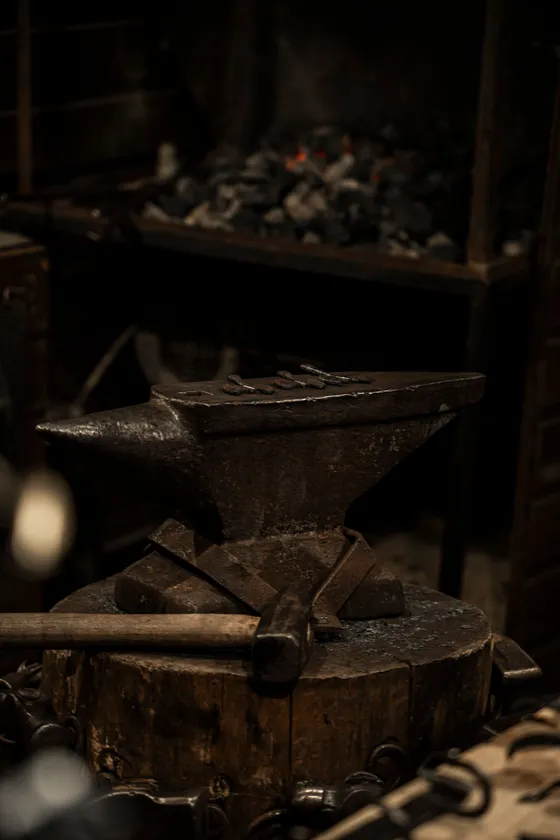
The zinc bath takes place in the workshop, on the shaped raw piece — never once the guardrail is already fitted. That's what guarantees even protection across the whole piece, including weld seams.
Frequently asked questions
What we're asked most often
Which fixing method for an old stone staircase?
Chemical anchoring is the reference method on an old stone or masonry stair stringer — confirmed on site depending on the support's exact condition.
Is galvanizing needed indoors?
Generally not — it's mainly justified for a structure exposed to the weather (balcony, terrace, facade window). An indoor stair guardrail is most often fine with powder coating or a blackened finish.
Can an already-fitted guardrail be repainted?
Yes, a powder-coated guardrail can generally be refreshed with a new coat after surface prep — assessed depending on the support's and metal's condition.
Top fixing or face fixing, how to choose?
It depends on your configuration: face fixing (English style) preserves walkway width on a narrow staircase, top fixing (French style) is most common when space isn't a constraint. Assessed together at the quote stage.
Quote
A particular support to describe?
Old stone, concrete slab, facade — the workshop replies with the right fixing method within 48h.