
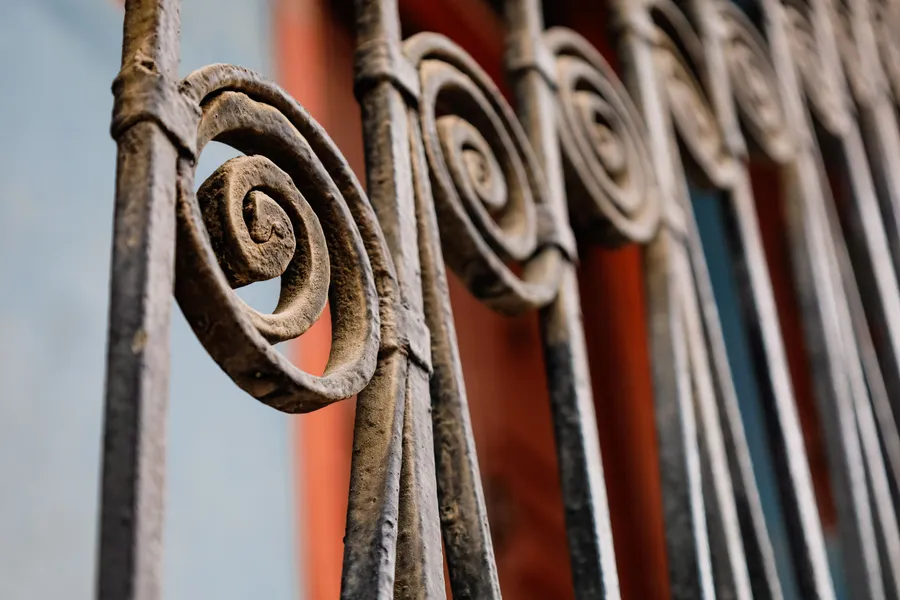
Maintenance depends on the finish
Maintaining a wrought-iron guardrail depends directly on its original finish: a galvanized and powder-coated outdoor structure needs different monitoring than a simply blackened indoor guardrail. In both cases, what matters most is regular inspection rather than heavy intervention.
What to watch for outdoors
For an outdoor guardrail, most of the protective work has already been done upfront through galvanizing and powder coating — see our article on galvanizing and powder coating. Routine upkeep mainly means: visually inspecting the most exposed areas (post bases, fixing points) once or twice a year, cleaning deposits (pollution, sea salt near the coast) with clean water and no abrasive product, and promptly flagging any paint chip that exposes the metal, for a touch-up before corrosion sets in.
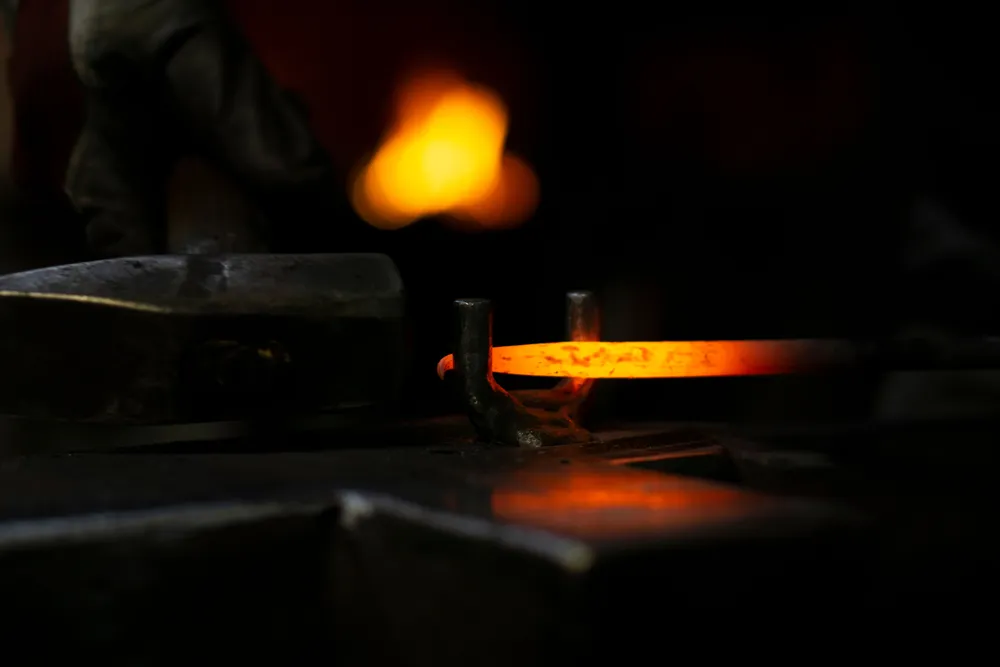
An indoor guardrail needs less vigilance
Sheltered from moisture and weather, an indoor stair guardrail ages noticeably more slowly. Regular dusting and, for an oil-blackened finish, the occasional re-oiling are usually enough to keep its look over time.
What to do about a scratch or chip
On a galvanized structure, a surface scratch that doesn't reach the steel isn't urgent: the surrounding zinc protects the area sacrificially (cathodic protection), a mechanism specific to galvanizing. A chip that exposes bare steel, however, deserves a prompt touch-up, before moisture can settle in durably.
Repainting: when?
The original powder coating may need an aesthetic refresh (dulling, accumulated micro-scratches) before the underlying zinc's anti-corrosion protection is itself compromised — these are two different clocks, the finish coat generally wears faster than the galvanized protection itself. A new powder-coat layer, after surface prep, can then extend the structure's look without affecting its underlying protection.
The finish choice at fabrication time (galvanizing or not, zinc thickness per the metal's section) determines much of the future maintenance — worth discussing with the workshop at the quote stage rather than fixing afterwards. See our standards and safety page for the detail on zinc thicknesses by metal thickness.
Frequently asked questions
How often should an outdoor guardrail be inspected?
Once or twice a year is a reasonable pace for a galvanized and powder-coated structure — more often near the coast or in an industrial environment, where corrosion progresses faster.
Can a forged guardrail be cleaned with a pressure washer?
Generally not recommended: the pressure can damage the paint film and, over time, weaken the surface protection. Clean water and a soft brush are usually enough.
Does visible rust mean the guardrail needs replacing?
Not necessarily — localised surface rust can often be treated and touched up. A full replacement is generally only needed in cases of advanced corrosion affecting the structure's strength.