
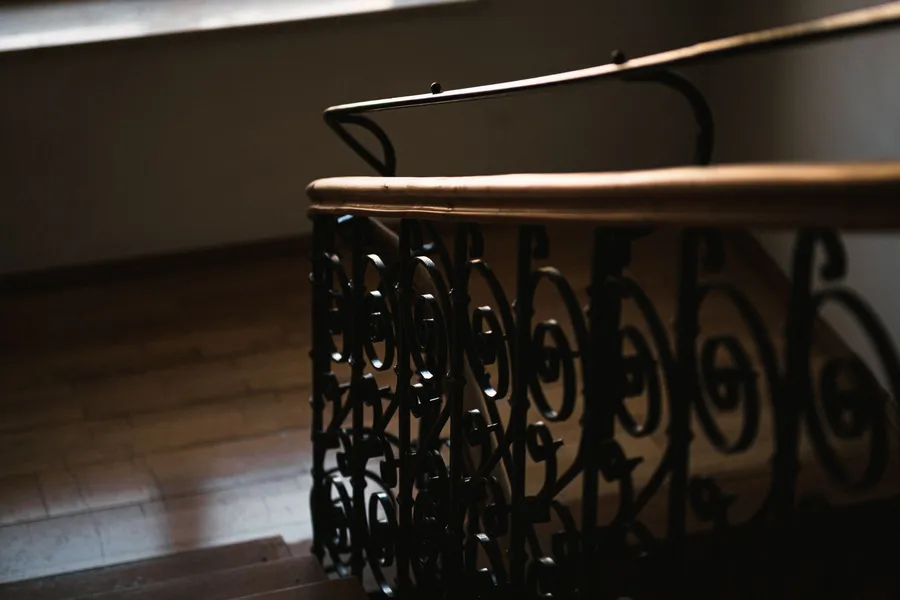
Two very different situations
A guardrail can be planned from the design stage of a new structure (staircase, balcony) or added after the fact to an already-existing structure. These two situations aren't handled the same way: the first allows fixing points to be planned from the shell-and-core stage, the second requires adapting to a support that's already in place.
Built-in guardrail: planning from the shell-and-core stage
On a new build, fixing provisions (anchors, inserts) can be planned as early as the slab pour or the staircase construction — anticipation that simplifies the final fitting and widens the available fixing options. It's the most favourable situation technically, but it assumes thinking about the guardrail early in the project, not at the very end of the build.
Retrofit guardrail: adapting to what's already there
On an already-built staircase or balcony, the guardrail is "retrofitted": fixed to an existing support, with no provisions planned in advance. This is the most common situation in renovation. It generally involves a prior assessment of the support (material, condition, available thickness) to choose the right fixing method — chemical anchoring into old stone or concrete, a bolted baseplate on an accessible slab. See our installation and finishes page for the detail on methods.

A retrofitted handrail: a distinct case
If your need is limited to a simple handrail added to an existing staircase that already has a functional guardrail, that's a different, more targeted project — see the dedicated site rampe-fer-forge.fr for that specific case. A complete guardrail, by contrast, covers securing the whole opening, not just adding a handrail.
Does it change the price?
Yes, to some extent: a build with fixing already planned (provisions in place) generally needs less on-site preparation than a retrofit requiring a support assessment and, sometimes, finish touch-ups around fixing points. It isn't the main price factor (length and pattern weigh more), but it's a parameter assessed at the quote stage.
As early as possible in both cases, but especially for a built-in guardrail: once the slab is poured or the staircase built with no provisions, anticipation is no longer possible, and the project effectively shifts to a retrofit.
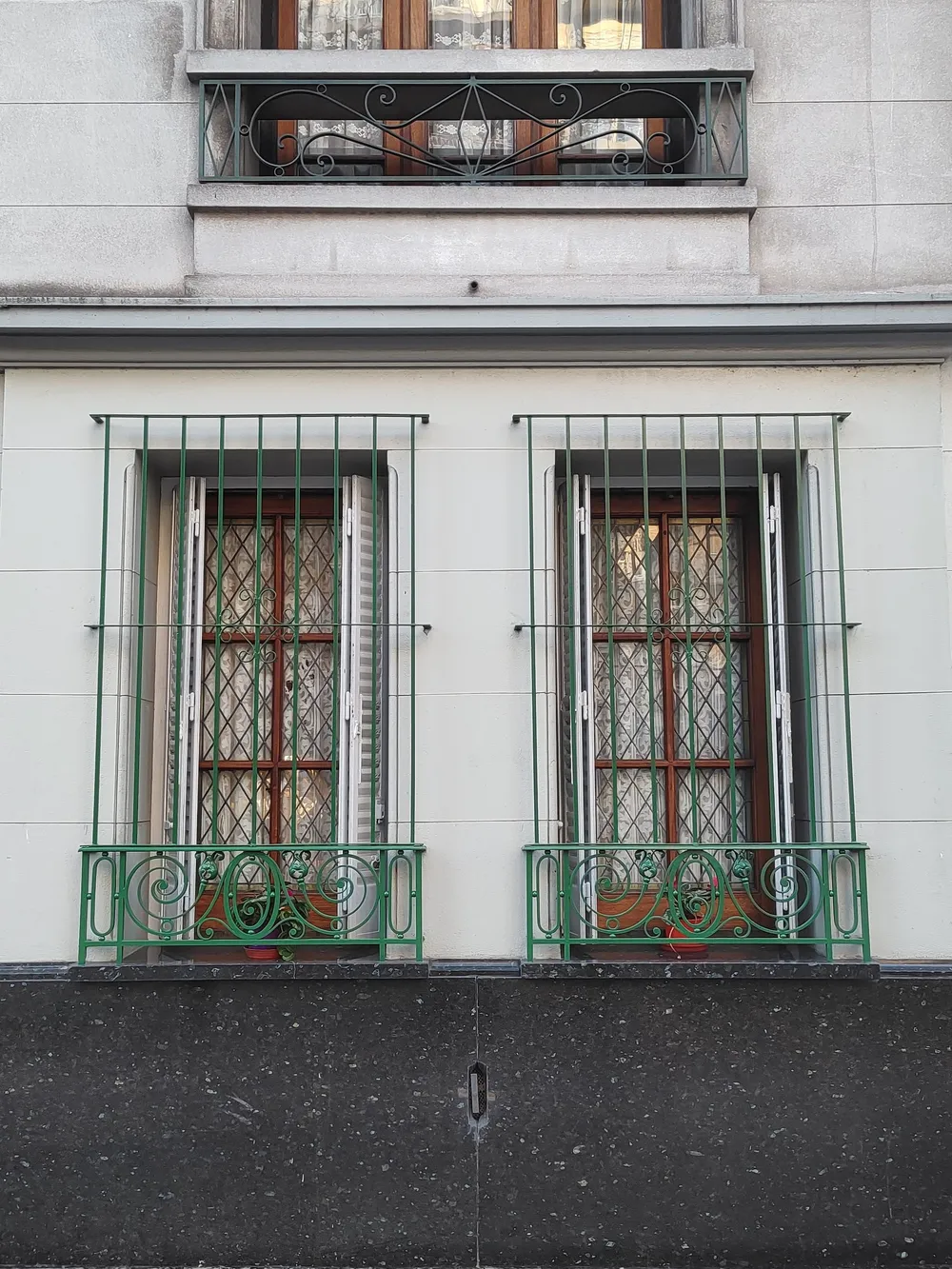
Frequently asked questions
Is it too late to plan ahead if the shell-and-core work is already done?
Not necessarily too late for the project, but it will be fitted as a retrofit guardrail, with an assessment of the existing support rather than planned-in-advance provisions.
Is a retrofit less solid than a built-in installation?
No, provided the fixing method suits the support (chemical anchoring, baseplate, mechanical anchor) — a well-executed retrofit is just as solid as a planned-ahead installation.
Do I need to provide plans for a built-in guardrail?
If you have execution drawings for the staircase or balcony, they're useful for planning fixing points — but it's not essential, a precise project description at the quote stage is enough to start the conversation.