
Same function, two opposite aesthetics
Whether ornate wrought iron or tensioned stainless cable, a guardrail meets the same height and spacing requirements — the standard doesn't favour any particular style. The choice between wrought iron and cable (or glass) is therefore mainly an aesthetic and architectural decision, to align with the building's style rather than a technical constraint.
Wrought iron: character and visible material
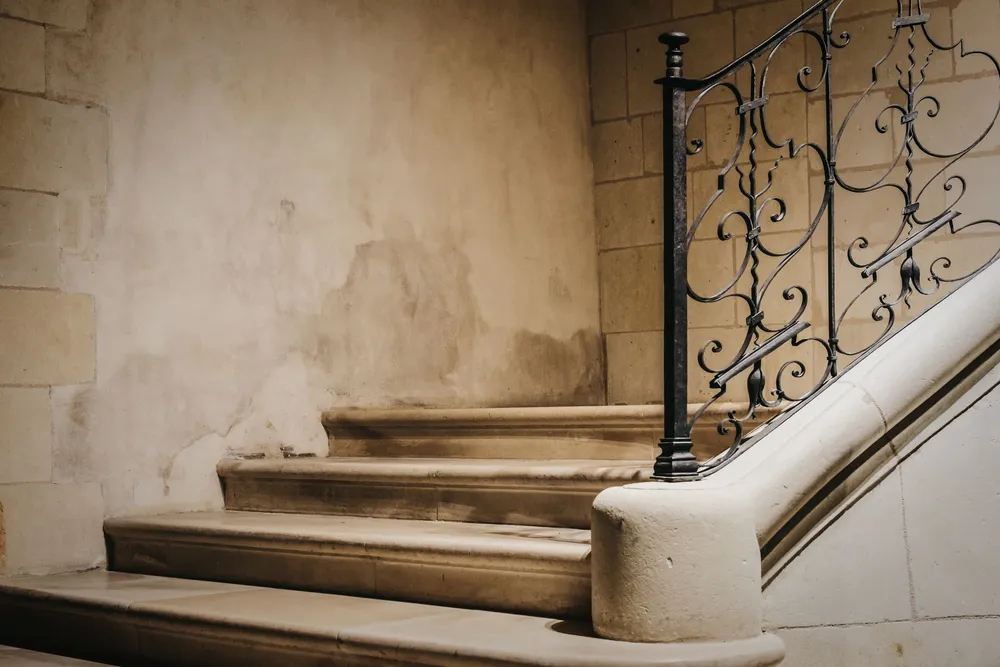
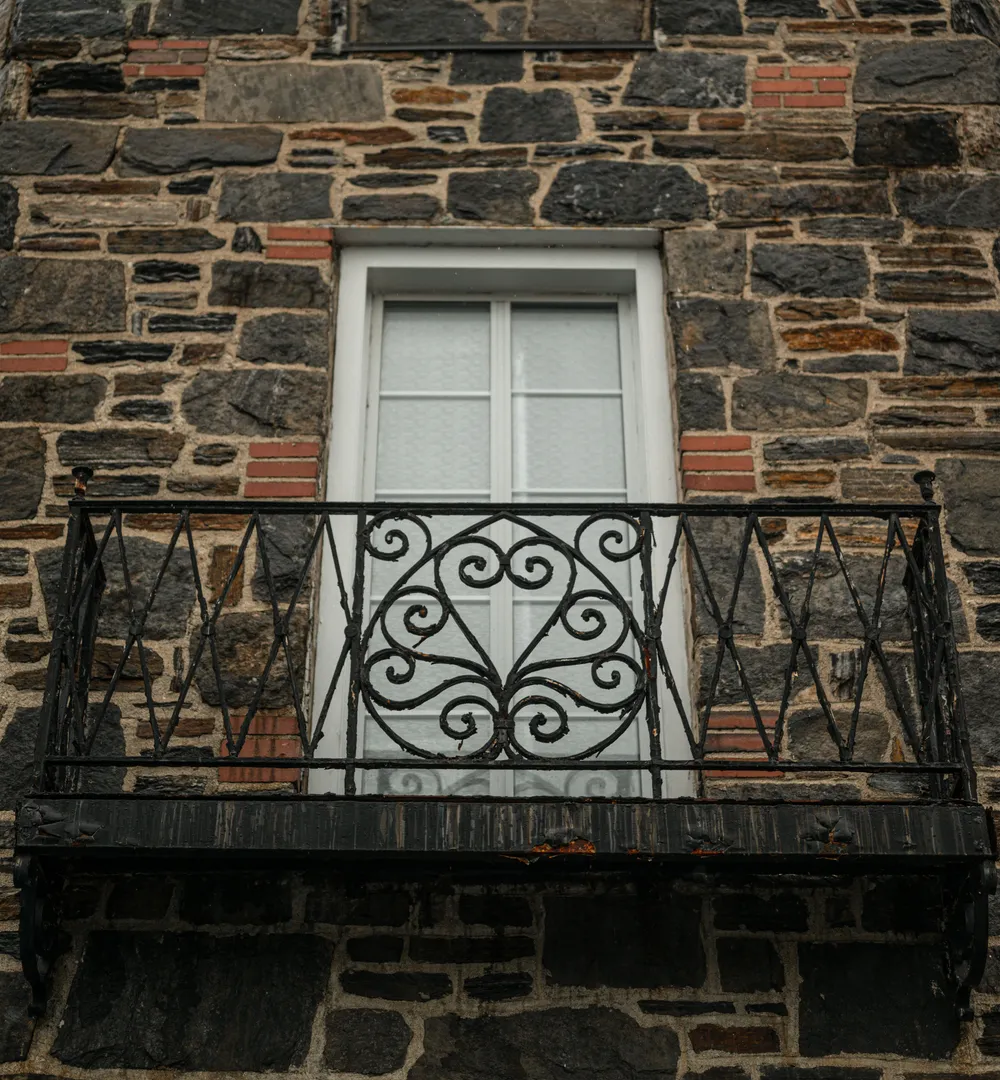
A wrought-iron guardrail asserts its presence: scrollwork, patterns, visible metal section — it fits an older architectural tradition (stone buildings, classical facades, interiors with a strong identity) while remaining relevant in a more contemporary setting when treated simply (straight balusters, matte finish). It's a choice that favours character and visible craftsmanship.
Stainless cable or glass: discretion and transparency
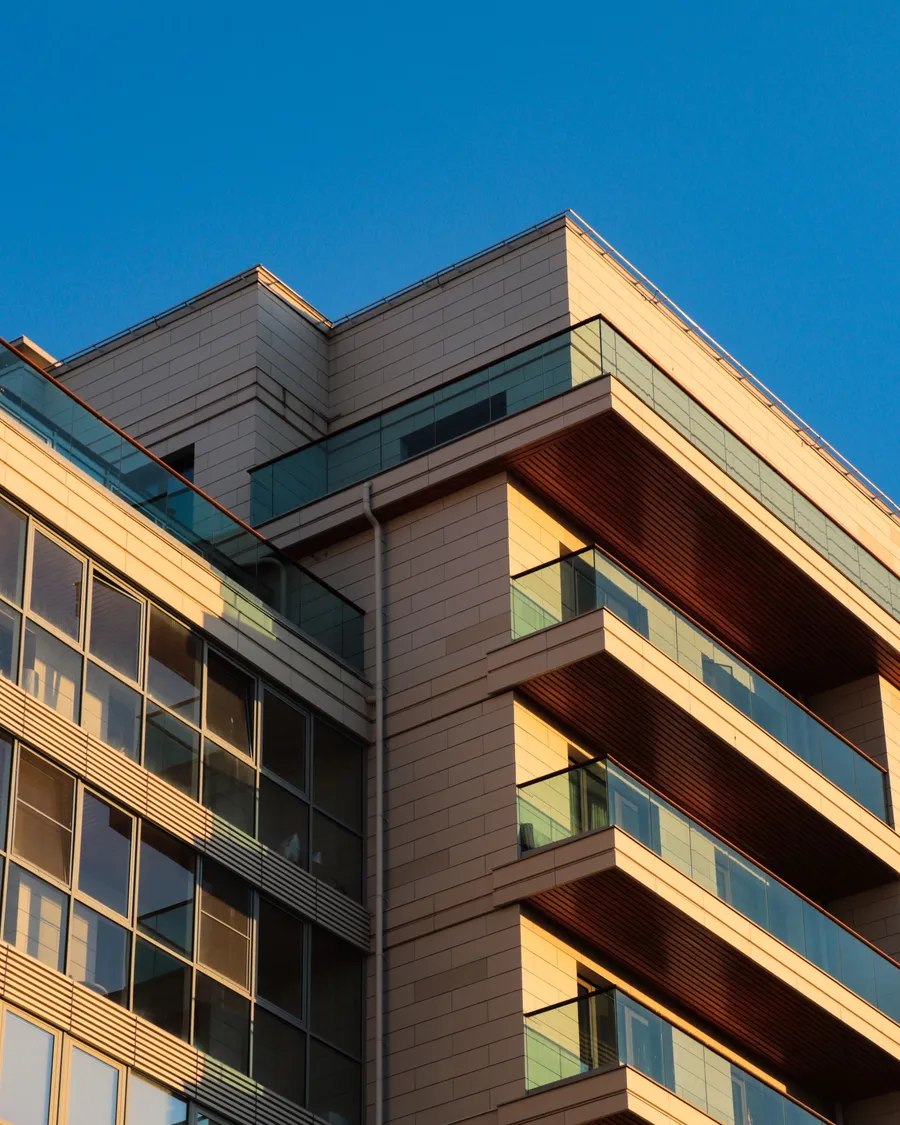
Conversely, a guardrail with tensioned cables or glass panels minimises the structure's visual presence, to preserve an open view — a common choice for contemporary builds, terraces with a view, or interiors where light and transparency take priority over ornamentation. The trade-off: regular glass maintenance (marks, cleaning) and an aesthetic that ages differently from forged metal.
A choice that isn't fixed in time
A well-maintained wrought-iron guardrail (galvanizing, powder coating) lasts decades without losing its character, while a cable or glass system demands more visible upkeep over time (cable tension to check, glass to clean regularly to stay transparent). This isn't an argument for one or the other outright, but a factor to weigh against your tolerance for maintenance.
A choice that doesn't need to be uniform
It's possible to combine both approaches on the same project — a more traditional wrought-iron stair guardrail, and a cleaner variant for a contemporary terrace, for example. The choice doesn't need to be uniform across a whole house, and mainly depends on the function and atmosphere sought for each space.
Frequently asked questions
Is a cable guardrail cheaper than a forged one?
Not necessarily — it depends on the finish level and complexity of each system. A simple forged guardrail (straight balusters) and a standard cable system can sit in comparable price ranges; see our pricing page for detail.
Do you make cable or glass guardrails?
Our specialty is the made-to-order wrought-iron guardrail. Describe your project at the quote stage so we can guide you based on your exact needs.
Does a forged guardrail suit a very contemporary house?
Yes, as long as you favour a simple design — straight balusters, matte finish, no excess ornamentation. Wrought iron isn't reserved for older buildings.